


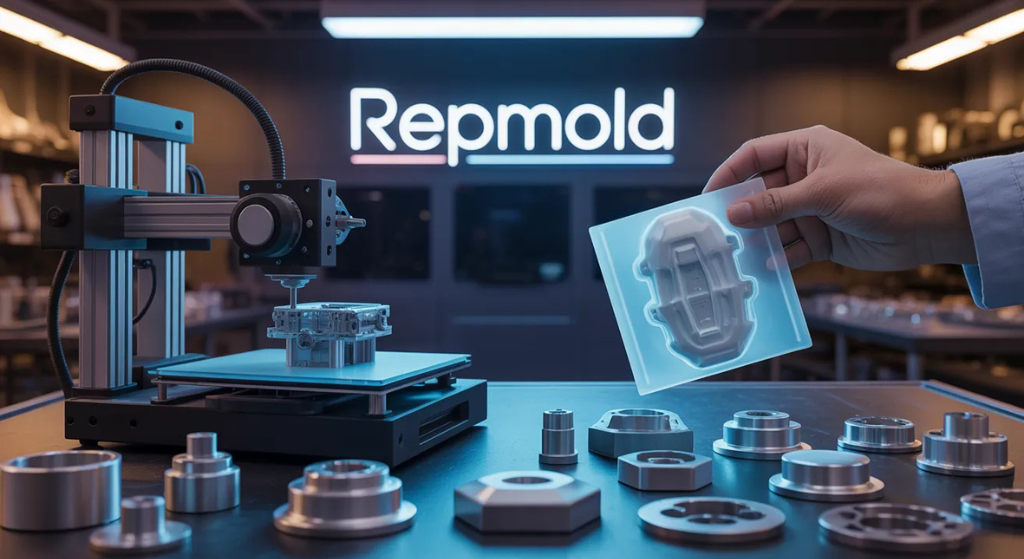
Repmold helps make things newer by changing how factories, designers, and small teams create multiple unique products. It is a unique combination of digital design, 3D printing, and other advanced molding techniques that allows parts to be copied immediately and accurately at a much lower cost than with old-school methods.
Repmoid helps solve the pain of waiting for a custom mold for so long or of throwing away expensive prototypes. It provides you with so many ideas that help you to finish these tasks within days instead of months. Many large businesses use this in cars, medical devices, electronics, and even architecture, and now use it to stay fast and flexible.
There is a complete guide that walks you through everything. You come to know how it actually works. There are so many simple steps you should try for yourself.
How Repmold Differs from Traditional Molding
For traditional injection changes, it needs heavy steel tools, long setup times, and big production runs to make sense. Change one detail, and you start over.
Repmold flips that. It always begins with a digital file that helps print or machine a master pattern, and then allows for flexible changes. You can tweak the design and make a new mold in a matter of hours.
Core Technologies That Power Repmold
Three main pieces make the repmold work:
- CAD software: The master creates a copy of the 3D models and then tests them virtually.
- Rapid prototyping: The printers or machines turn the digital file into a physical one.
- Replication systems: Flexible molds capture every detail of the master, then cast parts in plastic, resin, metal, or rubber.
Step-by-Step: How Repmold Actually Works
Here is the process in plain steps:
- Make a design in CAD software.
- To check for problems, you should run simulations.
- By using a machine, you have to print a master pattern.
- Use a flexible mould.
- Use casting material for the mould.
- For a cure, remove the part and repeat as needed.
- Finish it, necessarily.
Key Benefits That Matter in Real Life
- Speed: Helps to make work faster from weeks to days
- Lower cost: Don’t use expensive steel tools.
- Less waste: The term “digital testing” means fewer failed prototypes.
- Better quality: Make consistent copies.
Real-World Applications Across Industries
Repmold shines wherever you need fast, accurate copies:
- Custom prostheses, surgical guides, and gadget housings for medical and healthcare use.
- Automotive: prototype brackets, internal trim pieces, and replacement parts that aren’t used very often.
- We use cases, plugs, and heat sinks for electronics.
Challenges and How to Overcome Them
No technology is perfect. Here are the main hurdles and fixes:
- Initial learning curve: Practice is needed.
- Material limits: Plastic does not work in casting.
- Upfront investment: There is a need for money for good 3D printers, and software costs money as well.
- Scale for large volumes: It works best for low- to medium-volume runs.
Actionable Tips to Get Started with Repmold
Ready to try it? Follow these steps:
- Pick one simple part you make often and redesign it in free CAD software like Tinkercad or Fusion 360.
- Print a master on a basic 3D printer or use a local service.
- Order silicone molding kits online and follow the included instructions.
- Cast your first five copies and measure them against the original.
How Repmold Fits into Industry 4.0 and the Future
These days, factories use cloud-based software, sensors, and other technology together. Repmold fits like a glove. You can tell when to alter or tweak the settings on each mould by looking at the data as it happens.
In the future, AI will be more firmly integrated into automatic design adjustments, the development of better materials as robust as injection-molded ones, and even robots that can handle the entire casting cycle.
The technology already helps businesses handle sudden spikes in demand or supply chain issues without descending into panic.
Why Repmold Gives You a Real Edge Today
Markets change quickly. Customers want personalized options and quick delivery. Repmold lets you test ideas cheaply, launch faster, and make changes on the fly.
This method lowers risk and encourages creativity, whether you run a startup, manage a production line, or design products. Early users say their customers are happier and their profit margins are healthier.
Conclusion
Repmold isn’t just talk. It’s a useful approach for building smarter, faster, and cheaper molds and parts. It opens doors that traditional production kept closed by combining digital tools with easy copying.
Start with modest projects, learn how to do them, and see how quickly your ideas become genuine things. Teams that can make things quickly without sacrificing quality will be the ones who do it in the future. Repmold gives you that power right now.
Frequently Asked Questions
What does repmold mean in simple words?
It means replication molding: using digital files and 3D printing to create a master, then making accurate copies with flexible molds.
Is repmold only for big factories?
No. Small businesses and even hobbyists use desktop versions for prototypes and small runs.
How much does it cost to start?
You can begin with a basic 3D printer and molding kit for a few hundred dollars. Professional setups run higher but pay for themselves quickly.
Can repmold replace injection molding completely?
It works great alongside it. Use repmold for testing and low volumes; switch to injection for very high volumes.
What materials can you use?
Resins, polyurethanes, silicones, some low-melt metals, and even concrete or plaster for non-industrial uses.
Does it support sustainable manufacturing?
Yes. Less waste, lower energy use, and many mold materials are reusable or recyclable.
How accurate are the final parts?
Modern setups hold tolerances within a few microns, close enough for most engineering needs.
