


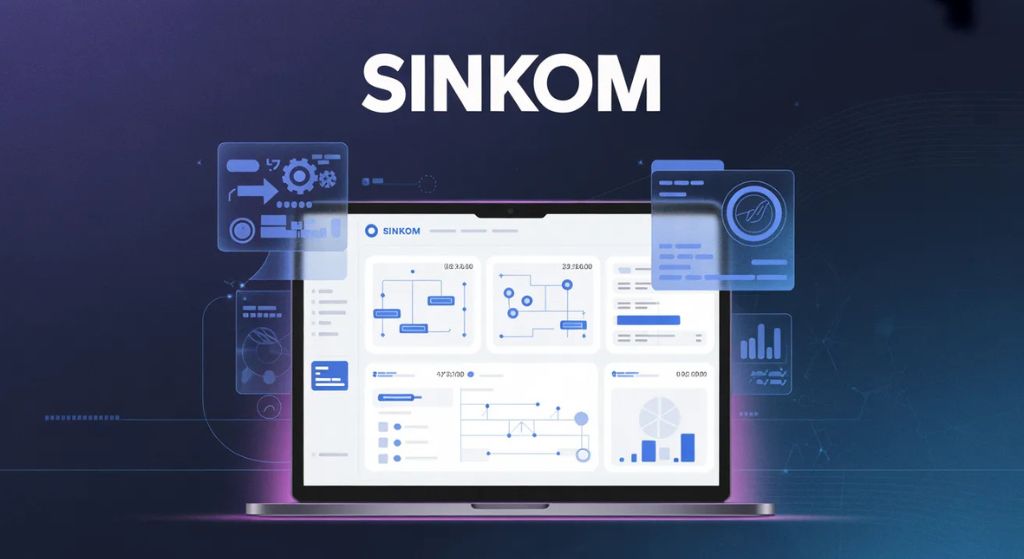
If you are running a business in today’s modern world, it takes a lot of data and time. Sinkom is a platform built to fix that. It takes a lot of things, such as corporations, communications, and automation, into one place. So, it is a multitasker. It helps us to complete the task within a reasonable time. If you are researching operations platforms, this is the resource that fills the gaps other articles leave open.
Why Sinkom Matters Right Now
Most businesses lose hours every week to fragmented systems. One app handles inventory. Another tracks projects. A third manages team chat. Data sits in silos. Decisions slow down. Errors creep in.
Sinkom was built to unify those moving parts. It plays a major role in our daily life as it helps us to connect with different devices, software, and people, so there is a flow of information in a very short time. Instead, we use different tools for that purpose.
What is Sinkom?
Sinkom is an integrated operations platform. It combines:
- Workflow automation that handles repetitive tasks without human input
- Team communication tools built into the same system where work gets done
- Device and software integration so your existing tools talk to each other
Think of it as the connective tissue between the systems you already use. Instead of replacing your ERP or CRM, Sinkom sits on top and makes them work together smoothly .
The Real Problems Sinkom Solves
Before looking at features, it helps to understand the pain points that drive teams to search for a solution like this.
Information Gets Lost Between Teams
When departments use different tools, updates do not travel. Sales knows something operations does not. Warehouse staff work from outdated inventory counts. Sinkom fixes this by keeping one shared data layer everyone pulls from .
Routine Work Eats Up Strategic Time
Employees spend hours on data entry, status updates, and report generation. Sinkom automates those tasks so people can focus on work that actually moves the business forward .
Compliance Becomes a Full-Time Job
Regulations change constantly. Tracking them across spreadsheets and email threads is risky. Sinkom helps centralise compliance documentation and sets automated reminders so nothing slips.
How Sinkom Works in Practice
Step 1: Connect Your Existing Tools
Sinkom integrates with common business software, including ERP systems, CRMs, accounting platforms, and warehouse management tools. You do not rip and replace. You connect.
Step 2: Determine your workflows
You define how work should flow. Is there a new order? Who gets notified? What data gets updated? Sinkom turns those steps into automated sequences.
Step 3: Let the System Run
Once configured, Sinkom handles the handoffs.
Step 4: Review and Adjust
Built-in analytics show where bottlenecks form. You tweak the workflow, and the system adapts.
Key Features That Make a Difference
The dashboard works in real time
Production output, order status, team workload, and inventory levels all update automatically .
Smart Automation
Rules-based automation handles repetitive work.
Security-First Design
End-to-end encryption, zero-trust authentication, and compliance with standards like GDPR and ISO 27001 help keep your data protected.
Cloud and Edge Support
Sinkom processes data in the cloud for heavy analytics and on local edge devices when speed matters. This hybrid approach keeps responses fast even if internet connectivity wavers .
Pricing: What to Expect
Sinkom does not publish standard pricing publicly, which is common for enterprise platforms. Costs typically depend on:
- Number of users
- Modules you activate
- Integration complexity
- Support level required
Ballpark ranges based on industry norms:
- Small business starter packages often begin around a few hundred dollars monthly
- Mid-market deployments with multiple integrations typically run into the low thousands per month
- Enterprise setups with custom development and dedicated support require direct quotes
Hidden costs to budget for:
- Implementation consulting
- Data cleanup and migration
- Staff training time
- Ongoing system administration
The best approach is to request a demo, explain your specific setup, and ask for a detailed proposal that includes first-year total cost of ownership .
Who Should Use Sinkom
Sinkom fits if you:
- Run a business with 20 or more employees
- Use three or more separate software systems that do not talk to each other
- Lose time to manual data entry and status updates
- Need real-time visibility into operations
- Have compliance requirements that are hard to track manually
Who Should Skip It
Sinkom is probably overkill if you:
- Are a solo operator or micro-business with simple workflows
- Already have one tool that handles everything you need
- Lack internal technical staff or budget for implementation support
- Need a solution deployed in days rather than months
How Sinkom Compares to Building Custom
Some companies consider building their own integration layer instead of buying Sinkom. Here is how that choice breaks down.
| Factor | Sinkom | Custom Build |
| Time to launch | 3 to 5 months | 12 to 24 months |
| Upfront cost | Subscription plus setup | Heavy development investment |
| Maintenance burden | Handled by vendor | Internal team must support |
| Flexibility | Configurable within platform | Fully customizable |
| Risk | Lower, proven platform | Higher, unproven build |
For most businesses, buying Sinkom wins unless you have highly unusual requirements that no existing platform can approach .
Common Mistakes During Implementation
Teams rush into Sinkom deployments and hit the same obstacles. Avoid these:
- Skipping the data cleanup phase. Bad data in your old systems becomes bad data in Sinkom.
- Trying to automate everything at once. Start with one or two workflows. Prove value. Then expand.
- Ignoring change management. The technology is only half the battle. Your people need to trust and understand it.
- Under-budgeting training time. Plan for weeks of learning, not a single afternoon session.
The Future of Sinkom
The platform is evolving in clear directions based on user feedback and technology trends :
- Broader integration marketplace to connect with more niche industry tools
- Sustainability features that track energy use and carbon footprint automatically
Frequently Asked Questions
Is Sinkom a replacement for my ERP or CRM?
No. It connects to them and makes them work together better. You keep the tools you have and add a coordination layer on top.
How long before we see results?
Most companies notice efficiency gains within the first month after full rollout. Full ROI typically shows within six to twelve months.
Does Sinkom work for small businesses?
It can, but the implementation cost and complexity make it most suitable for companies with at least 20 employees and multiple systems to integrate.
What if we have legacy equipment?
Sinkom supports both modern cloud APIs and older systems through middleware. Your implementation team will assess compatibility during the discovery phase.
Is our data safe?
Sinkom uses end-to-end encryption and zero-trust security models. It meets GDPR and ISO 27001 standards .
Can we try it first?
Most vendors offer pilot programs or limited-scope deployments. Ask for a proof-of-concept tied to one specific workflow.
Final Words
Sinkom is not magic. It is a well-built operations platform that connects your people, tools, and data so work flows faster and cleaner. It requires real investment in time and money. It demands thoughtful implementation. But for businesses drowning in disconnected systems and manual processes, it offers a clear path out.
If your team spends more time managing workflows than executing them, Sinkom deserves serious consideration. Start with a demo, ask hard questions, and run a pilot before committing. The businesses that succeed with it are the ones that plan the rollout carefully rather than expecting the software to fix everything overnight.
