


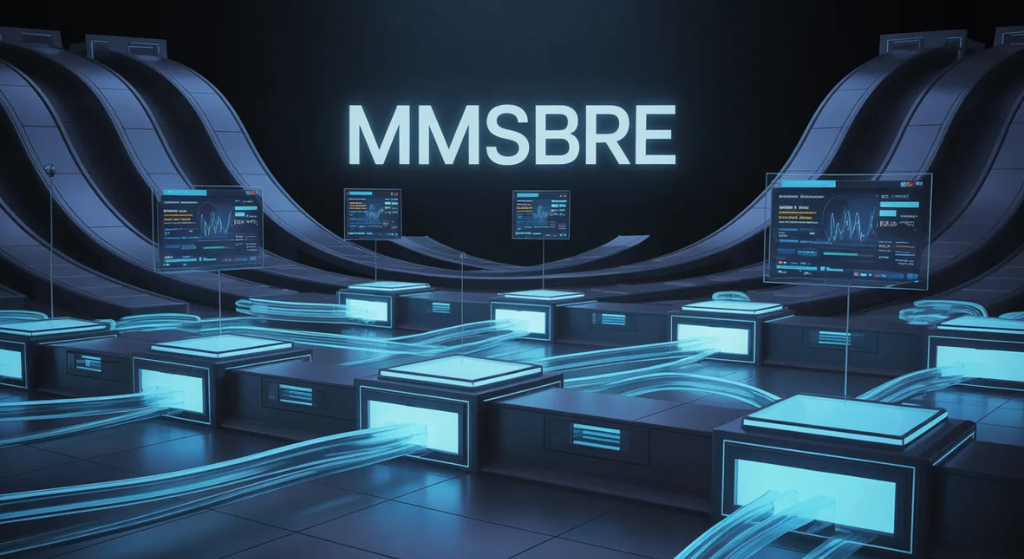
If you typed “mmsbre” into Google and got a bunch of vague blog posts, you’re not alone. Here’s the simple truth: MMSBRE is a practical way to build digital systems that stay fast, flexible, and reliable even when everything around them changes.
The abbreviation of MMSBRE is Multi-Media Streaming Relay Environment. It is the platform that helps to move videos, audio, and live content smoothly to thousands or millions of people without freezing or dropping quality.
Why MMSBRE Matters in 2026
We’re creating more content than ever. Remote teams use dozens of apps. AI handles routine tasks. Old systems can’t keep up. MMSBRE solves the two biggest headaches:
- Lag and dropped quality in streaming (whether you’re a small YouTuber or a big broadcaster).
- Tool overload in business (the average company juggles 40–80 different apps that don’t talk to each other).
When your setup follows MMSBRE principles, everything flows. You waste less time copying data between tools. Your live streams stay crisp even with spotty internet. And when something breaks, the rest keeps running.
How MMSBRE Actually Works
- Modularity – Everything works independently. You will swap one, and nothing else crashes.
- Relay and routing – Data or media gets handed off intelligently between “relay nodes” (think smart checkpoints). If one path is slow, it automatically tries another.
- Built-in measurability and resilience – You track what’s working in real time, and the system can heal itself when stress hits.
In practice, it looks like this:
A creator goes live from their phone. The MMSBRE-style setup compresses the video on the fly, sends it through multiple relay servers around the world, and delivers a smooth stream to viewers on Wi-Fi, 5G, or even slow mobile data. No buffering.
Or take a small business: instead of exporting CSV files between their CRM, email tool, and accounting app, the system automatically moves data, flags issues, and updates dashboards in real time.
Real Benefits You’ll Actually Notice
- Time saved: Most teams cut manual busywork by 60-70%. One marketing manager I know stopped spending two hours every Monday merging reports.
- Lower costs: Mid-sized companies report saving $15,000–$40,000 annually by avoiding costly custom integrations.
- Better quality: Live streams stay sharp. Business decisions happen with fresh data instead of last week’s numbers.
Who Should Care About MMSBRE
- Content creators and streamers: Faster, more reliable broadcasts without paying for enterprise-level platforms.
- Small and mid-sized businesses: Connect the tools you already use without hiring a developer.
- IT teams and developers: Build apps that don’t turn into unmanageable monsters.
- Anyone tired of “it worked yesterday but not today” tech?
How to Start Using MMSBRE Principles (Step-by-Step)
There is a need to buy something special, like software, or spend weeks in training. Here is a plan that you should follow.
- First of all, you should make a list of every tool and process it.
- The videos you are uploading may take time, so you have to take time and use three different apps.
- You should use no-code tools. Various tools are used in this regard, such as Zapier. For streaming, you should try Cloudflare Stream or AWS Media Services.
- You should use simple dashboards in Google Data Studio.
- Lastly, run a small pilot for two weeks, measure results.
Tools That Fit Perfectly (What Other Guides Missed)
This is where most articles fall short they stay vague. Here are actual tools that work well with MMSBRE thinking:
- Streaming side: Cloudflare Stream, Wowza, or Red5 for relay-style delivery.
- Business side: Airtable, Zapier, Slack, and Google Workspace create a modular ecosystem.
- Monitoring: Prometheus or New Relic for real-time health checks.
- AI boost: Tools like Make.com’s AI actions or Microsoft Power Automate that adapt rules on the fly.
Start with what you already pay for and layer modular connections on top.
Common Mistakes to Avoid
- Trying to fix everything at once (start small).
- Skipping training—your team needs to understand the new flow.
- Ignoring security (use encrypted connections and least-privilege access).
- Assuming it replaces strategy—great systems still need good decisions.
What’s Next for MMSBRE
In the next couple of years, expect tighter AI integration that makes systems self-optimizing. Decentralized relays will make streaming even more resilient to outages. The line between “media delivery” and “business operations” will continue to blur. Companies that adopt these ideas early will move faster and spend less.
Conclusion
MMSBRE isn’t some complicated new product you have to buy. It’s a smarter way to build digital systems that flex instead of breaking. Whether you run live streams, manage a growing team, or want less tech frustration, the principles work right now.
Frequently Asked Questions
What does MMSBRE stand for?
Multi-Media Streaming Broadcast Relay Environment. It also describes the broader idea of modular, connected digital systems.
Is MMSBRE a specific piece of software?
No. It’s a framework and set of best practices. You implement it using existing tools.
Can small businesses or solo creators use it?
Absolutely. Many start with free or low-cost tools like Zapier and Cloudflare.
How long does it take to set up?
A basic version of a single workflow often takes 1–2 weeks. Full company-wide adoption usually takes 4–8 weeks.
Does it work with AI tools?
Yes. Most modern MMSBRE setups use AI for smarter routing and automatic fixes.
Is it only for streaming video?
No. The original focus was media, but the same modular ideas now help any digital operation run more smoothly.
Will it replace all my current apps?
No. It connects and improves them, so you keep what already works.
Where can I learn more hands-on?
Look at free tutorials on Zapier University or Cloudflare’s streaming docs. Experiment with one small integration this week
