


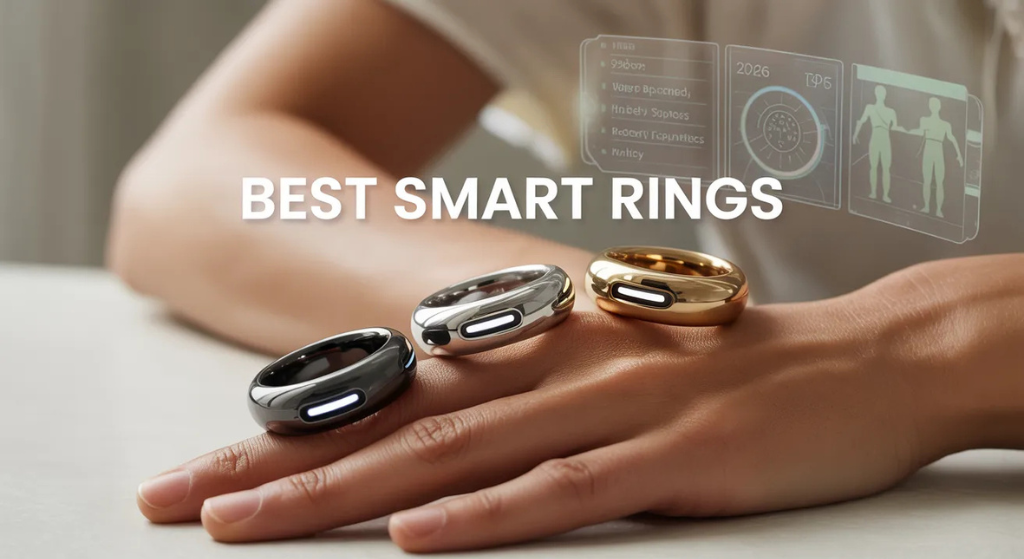
There are so many tools, but the latest are smart rings. It is beneficial because it helps to track our sleep, recovery, stress, and daily energy without a bulky watch getting in the way. In this modern era, it has become an integral part of our lives. If you are struggling with your poor sleep schedule, training harder, or you just want to know your body better, the right ring can make a noticeable difference.
We get the latest reviews from sources such as Wareable, WIRED, CNET, and more, with real user experiences. There are so many lists that have been shown on the top players, but they often miss the practical stuff: sizing tricks and many more, which help you to fit your phone. Here’s our clearer, more complete guide—built to answer exactly what you’re wondering before and after you buy.
At a Glance: Top Smart Rings in 2026
- Best overall: Oura Ring 4
- Best for Samsung/Android users: Samsung Galaxy Ring
- Best no-subscription option: Ultrahuman Ring Air (note: limited US availability)
- Best budget & battery life: RingConn Gen 2 / Gen 2 Air
- Best for unique medical features: Circular Ring 2 (ECG)
1. Oura Ring 4 – Still the One to Beat
Most experts (and testers who’ve worn it for months) call the Oura Ring 4 the smartest ring you can buy right now. It’s lighter and more comfortable than the Gen 3, with improved sensors that deliver spot-on sleep stages, readiness scores, stress tracking, and even early illness warnings via temperature shifts.
Why it wins:
- Actionable daily insights (not just raw data)
- Strong women’s health features, including cycle prediction and pregnancy insights that sync with apps like Clue or Natural Cycles
- Automatic activity detection and AI meal logging
- Works great on iOS and Android
Real talk on the downsides:
- Starts at $349 (up to $499 for premium finishes)
- Requires a $5.99/month membership after the first free month for full insights (data stays safe if you pause it)
- Titanium can scratch—ceramic versions resist it better
Battery lasts 5–8 days depending on size and settings. If you want the deepest health picture and don’t mind the fee, this is the ring most people end up loving long-term.
2. Samsung Galaxy Ring – Perfect If You’re in the Galaxy Ecosystem
If you use a Samsung phone, this ring feels like it was made for you. No subscription ever. It delivers solid sleep coaching, an Energy Score, and seamless integration with Galaxy Watches (you can even swap data between them).
Standout perks:
- Super comfortable and slim titanium build
- Up to 7 days of battery
- Gesture controls (pinch to snap photos or silence alarms on Samsung phones)
- Cycle tracking that pairs nicely with Natural Cycles
Who should skip it: Non-Samsung users lose some smarts (like the full Energy Score). It’s also pricier at around $400.
3. Ultrahuman Ring Air – Best Subscription-Free Experience
No monthly fees, ever. This helps you to provide solid recovery scores. It is lightweight and easy to wear all day.
Watch out: Availability issues in the US due to past patent rulings (check current stock or consider international options). The battery lasts about 4–6 days.
4. RingConn Gen 2 (or Gen 2 Air) – Best Value and Longest Battery
Want great tracking without the premium price or subscription? This is it. The Gen 2 Air costs just $199 and lasts 8–12 days on a charge often beating everything else. It’s ultra-thin, accurate for sleep and steps, and includes a handy charging case.
What Most Reviews Missed:
Long-term costs add up
Oura’s membership sounds annoying, but over three years it’s roughly $200–220 extra. Compare that to buying a new ring every couple of years because cheaper no-sub models feel basic. RingConn or Ultrahuman save you that monthly hit but may leave you wanting deeper insights.
Durability in real life
Titanium scratches more than you’d think—especially silver finishes during workouts or daily wear. Just take them off for heavy weightlifting or hand sanitizer to avoid damage.
Sizing is easier than it sounds
Every major brand sends a free sizing kit.
Privacy and data security
Your health info is personal. Oura has strong privacy policies (data isn’t sold, it’s GDPR compliant, and you can export everything). No-sub rings like RingConn store less cloud data but still sync to your phone. Always check the app’s privacy settings.
Smart rings vs. smartwatches
Rings win for passive 24/7 tracking and comfort at night. Watches are better for real-time workout stats and GPS. Many people now use both: a ring for recovery and a watch for training.
Actionable Tips to Get Real Results
- You should wear it on your finger, which is more consistently available for data collection.
- You should have to check the score. Twice in the morning or in the evening.
- Combine with simple habits: consistent bedtime, morning sunlight, and cutting late caffeine. Users report the biggest “aha” moments when they actually act on the data.
- Start with a 30-day trial mindset. Most brands have good return policies.
Final Words
The Oura Ring 4 remains the best smart ring for most people in 2026 because its app turns raw numbers into clear, helpful advice. If you hate subscriptions, go Ring Conn Gen 2 for value or Ultrahuman for features. Samsung Galaxy Ring owners get seamless integration without extra fees.
Whichever you pick, the real win comes from using the data—not just wearing the ring. Pick one that fits your budget, phone, and goals, and you’ll likely notice better sleep and energy within weeks.
Ready to try one? Order a sizing kit first. Your finger (and future self) will thank you.
Frequently Asked Questions
Do I need a subscription?
Only for Oura (after the first month). Most others give full features for life.
Are smart rings accurate?
Yes for sleep, heart rate variability, and recovery. Workout tracking is still basic—better as a daily wellness tool than a sports watch replacement.
How long does the battery really last?
5–12 days depending on the model and how often you use continuous heart-rate mode. Real-world use usually hits the lower end of claims.
Can I wear it 24/7?
Absolutely. Most people forget it’s there. Just charge it every few days.
What about women’s health tracking?
Oura leads with cycle prediction, temperature-based ovulation insights, and pregnancy modes. Others are catching up but aren’t as advanced.
Will it scratch easily?
Titanium can. Choose ceramic finishes or add a cheap protector if you’re active.
iPhone or Android?
Oura and RingConn work great on both. Samsung Galaxy Ring shines brightest with Galaxy phones.
Is it worth it in 2026?
For most people tracking sleep and recovery—yes. The tech has matured, prices have stabilized, and the insights actually help you feel better day to day.
